Their story
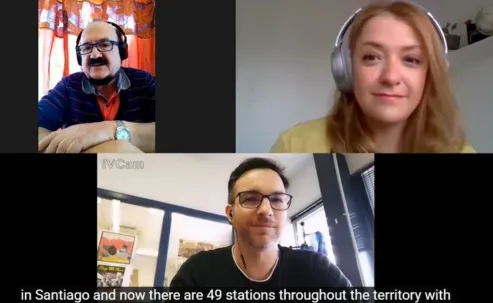
Extract from Interview with Radio World with Michael Radomski, CEO of UPLINK Group
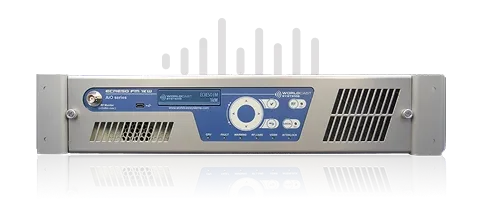
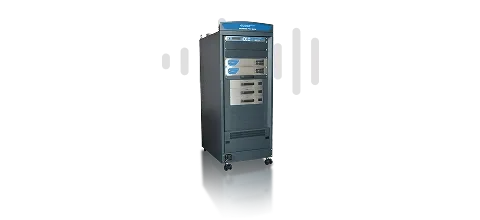
WorldCast Systems has said that a massive implementation of its SmartFM technology in Germany by UPLINK Network GmbH — now approaching 1,000 transmitters — is “a major step towards the decarbonizati on of FM broadcast in Germany.” The manufacturer says its AI-based SmartFM technology enables broadcasters that use its Ecreso transmitters to reduce energy consumption by up to 40%. A 10 kW FM using an Ecreso transmitter with SmartFM could save 824 MWh over 10 years compared to an older transmitter wi th 55% efficiency. The tool predicts human perception of audio quality at the limit of The tool predicts human perception of audio quality at the limit of coverage and depending on content characteristics. According to WorldCast, after a psychoacoustic algorithm qualifies the robustness of audio content to perturbations, SmartFM dynamically changes the RF output power in relation to broadcast content. In Radio World’s latest ebook “Artificial Intelligence in Radio,” we asked Michael Radomski, CEO of UPLINK Group, about the large project.
RADIO WORLD: What stations are served by this rollout?
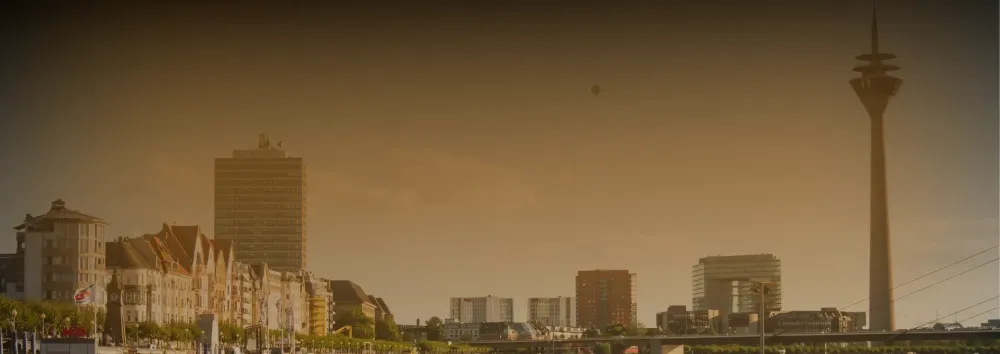
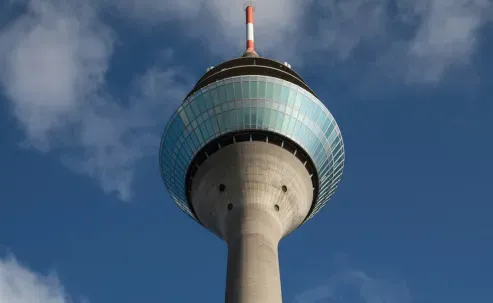
RADOMSKI: UPLINK Group is the market leader for FM broadcasting in Germany and supplies about 50% of the private and a large portion of the public broadcasters. We operate almost 900 FM frequencies at approximately 600 locations; among them are all large radio towers in Germany, e.g. in Berlin, Munich, Hamburg, Stuttgart,Düssel dorf etc. We run those FM frequencies exclusively with transmitters from French We run those FM frequencies exclusively with transmitters from French producer WorldCast Systems, ranging from 100 to 10,000 watts transmissi on energy. They serve private radio groups such as Regiocast Group, TopRadio Group, Hit Radio FFH, Radio NRW, ATSW Group, Metropol FM, Schlager Radio and others, as well as public radio entiti es like DeutschlandRadio, NDR-MV, RBB, SR, WDR and Thüringer Landesmedienanstalt.
RADIO WORLD: How did it come about?
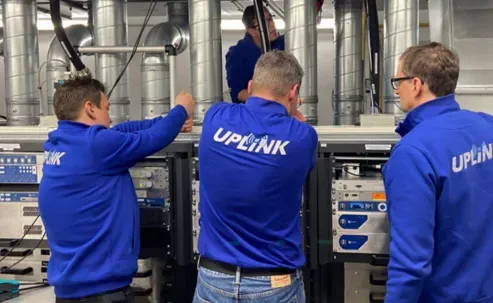
RADOMSKI: WorldCast Systems had said that Uplink would see significant energy savi ngs through a chargeable software update to its modern FM transmitters called SmartFM. The specialists at UPLINK initi ally were skeptical , since a reduction in transmissi has an impact on transmission quality. We held long discussions and conducted many laboratory tests and later extensive field tests.
After that there were some improvements to the software for the special regulatory requirements of the German market and of course deep commercial considerations. At the end it became obvious that SmartFM is a real game-changer in broadcasting. Understanding this, UPLINK then took on the task of convincing its customers in Germany of the advantages of SmartFM.
RADIO WORLD: When was this work done?
RADOMSKI: UPLINK started an extensive and technically detailed test phase with public service customer DeutschlandRadio — in the end, representi ng a total of 220 FM frequencies — in July 2020. In October 2021, the gradual conversion of other customers was started. Today most customers in Germany have switched.
RADIO WORLD: Who led the technical project and who else was involved?
RADOMSKI: On the market side, Thomas Weiner, the COO of the UPLINK Group, and his team laid the foundations for the introduction of SmartFM in Germany. On the WorldCast Systems side, the key people were Gregory Mercier Diaz, the director of product marketing and pre/post sales support, and Christophe Poulain, co-president of WorldCast Group. UPLINK established the SmartFM project in Germany as one of the first UPLINK established the SmartFM project in Germany as one of the first transmitter network operators worldwide. This would not have been possible without a trustful and multi-stage cooperation between UPLINK and WorldCast. At the end, strong reservations of the customers and national peculiariti es in regulation had to be solved together.
READ THE FULL INTERVIEW HERE
--
[Date of publication: March 2024]